 Multiple sector rules in force
AI Laws in China
China regulates AI through a stack of binding, sector-specific rules from the Cyberspace Administration (CAC) rather than one omnibus law. Businesses providing generative-AI, algorithmic-recommendation, or deep-synthesis services to the Chinese public must ensure content legality, complete algorithm filings and security assessments, verify real-name user identity, and — since September 1, 2025 — apply both explicit (visible) and implicit (metadata) labels to all AI-generated content.
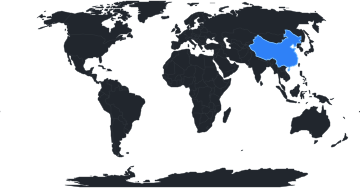
Applicable laws
Penalty: No fixed fine in the Generative AI Measures; violations enforced via Cybersecurity Law, Data Security Law and PIPL (warnings, rectification, service suspension)
AI-specific legislation (7)
Updated September 5, 2026Bills and instruments in China whose own subject is artificial intelligence or automated decision-making, pulled automatically from the official legislature feed. See our scope definition.
Recent AI law developments in China
Updated September 16, 2026Recent news coverage of AI regulation and policy in China. Headlines are aggregated automatically; follow each link for the full story.

Coverage from The Times of India on AI legislation and regulation relevant to China.

Coverage from CNBC on AI legislation and regulation relevant to China.
Coverage from CBS News on AI legislation and regulation relevant to China.

Coverage from WSJ on AI legislation and regulation relevant to China.

Coverage from odt.co.nz on AI legislation and regulation relevant to China.
High-risk industries to watch in China
US-based? Check your state laws too
If you're a US company serving China customers, you need to comply with both your state's AI laws and China regulation.
Anchored to the primary government source (statute, bill text, or agency rule) and verified directly against it · Last verified Jun 16, 2026. See our methodology.
- ↗chinalawtranslate.comhttps://www.chinalawtranslate.com/en/generative-ai-interim/
- ↗chinalawtranslate.comhttps://www.chinalawtranslate.com/en/ai-labeling/
- ↗cac.gov.cnhttps://www.cac.gov.cn/